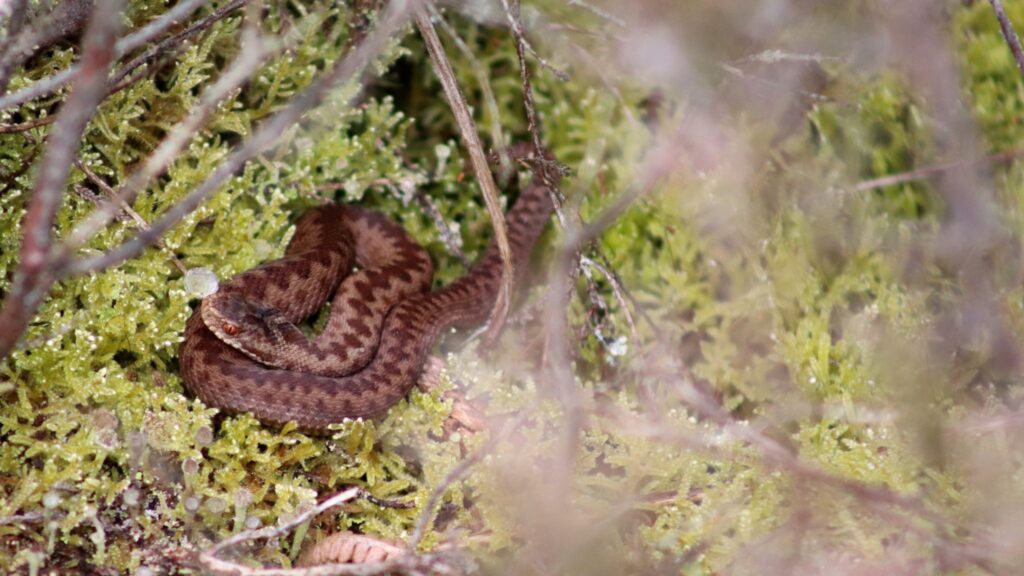
Our adder (Vipera berus) is a relatively small snake at only 60-80cm, and can be found across England, Scotland and Wales (although absent from Ireland). They prefer heathland, moorland, grasslands and woodland edges and can be seen basking in sun on warm spring days. They can be identified by their distinctive zigzag pattern down their backs, although melanistic (black) adder do occur. They are most active from March to October, going into brumation (hibernation for reptiles, slowed metabolism but remain semi-alert) over the winter.
The adder is our only venomous snake, but they are a shy animal and would rather keep out of our way. The risk of being bitten by an adder is extremely low due to their retiring nature. Bites tend to happen when they attempt to defend themselves from perceived harm, for instance when someone stands on one or attempts to pick them up. Biting is a last defence for them, and they would much rather slither to safety.
While most bites are mild and resolve with basic medical care, symptoms can include pain, swelling, and nausea. Severe reactions are rare but possible, particularly in children, the elderly or those with allergies. Although highly unlikely, adder bites can be fatal. With that in mind, please be respectful of their homes when entering places they live by watching your footing, keeping out of long grass and keeping your dogs under control or on a lead. The ARC Trust has an information leaftlet on “Dogs ‘n’ adders”.
Our adder is in serious decline in the UK, the species is already absent from some former strongholds and considered one of the UK’s most threatened reptiles. This is due to many different reasons, such as habitat loss and fragmentation, human disturbance and persecution, climate change and genetic isolation. It is absolutely crucial that we engage in conservation efforts and raise a better public awareness of this iconic species. You can help by reporting sightings on our website, which helps us build a picture of where they are, and better advise land managers. By respecting these beautiful reptiles and their habitats, we hope to ensure their survival for future generations.